Pharma & Biotech: The Big Wins of 2026

We often get to visualize the big pharma wins in terms of blockbuster sales, top M&As and dollar figures. However, what we fail to often capture is the level of scientific innovation the biopharma companies often give to the world through state of the art science, and years of hard work. I wanted to write this brief article that captures a framework - to measure the level of impact pharma has had on patients' lives. I don't aim to rate these innovations because its very nuanced to rate degree of wins in pharma. Some therapies focus on scale (such as obesity), while some focus on precision (for ex: precision oncology, CAR-T therapies).
Lets go ahead with the framework:
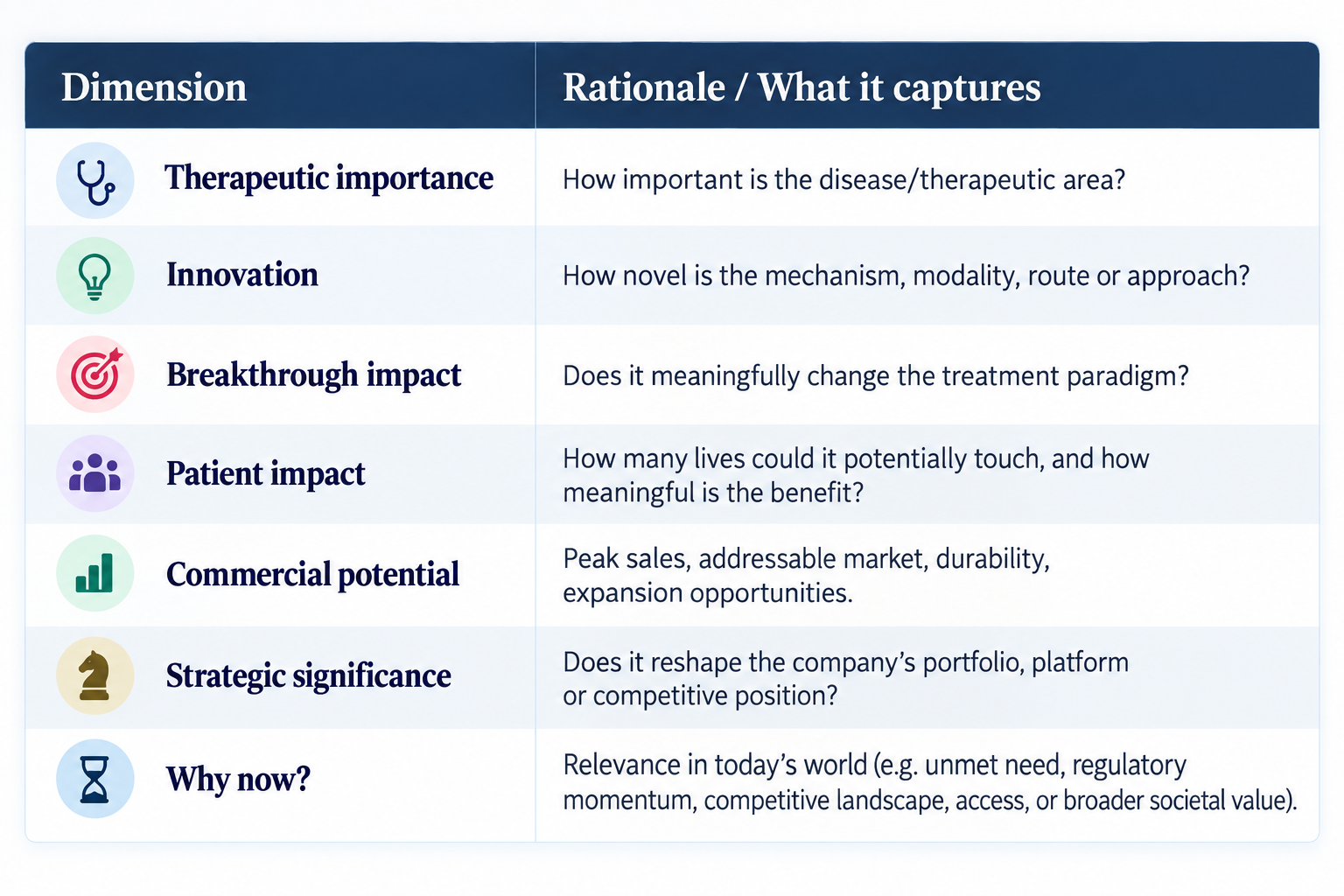
Using this framework, I have collated the biggest wins 0f 2026 in no particular order.
1. Scientific breakthroughs
Orforglipron
Eli Lilly | Obesity & Metabolic Health
An oral GLP-1 for chronic weight management. The GLP-1 revolution is moving beyond injections. Orforglipron brings once-daily oral GLP-1 therapy into obesity care, potentially making incretin-based treatment more convenient and accessible for a much larger population.
Why it matters:
This is innovation at massive scale — combining validated biology with a fundamentally different treatment experience.
Impact lens: Scale + Access + Convenience
Daraxonrasib
Revolution Medicines | Oncology
The innovation: Targeting the RAS pathway in metastatic pancreatic cancer.
RAS has been one of the most challenging targets in oncology for decades. Daraxonrasib became a major 2026 milestone by providing a targeted treatment option for metastatic pancreatic adenocarcinoma.
Why it matters:
This is a story about turning difficult biology into clinically actionable medicine.
Impact lens: Scientific Breakthrough + Precision
Otarmeni
Regeneron | Genetic Hearing Loss
The innovation: Gene therapy for OTOF-related hearing loss.
Otarmeni is an AAV-based gene therapy for patients with severe-to-profound hearing loss caused by biallelic OTOF variants. It became the first FDA-approved gene therapy for this form of genetic hearing loss in 2026.
Why it matters:
Rather than managing the consequences of genetic hearing loss, the therapy attempts to address the underlying genetic defect.
Impact lens: Precision + Transformation
Apitegromab
Scholar Rock | Spinal Muscular Atrophy
The innovation: Targeting muscle loss itself in SMA.
Isembyld became the first FDA-approved therapy specifically targeting muscle loss in spinal muscular atrophy, complementing existing treatments that target the underlying motor-neuron biology.
Why it matters:
It expands the treatment paradigm from preserving neurons to improving muscle function — showing how understanding disease biology can open an entirely new therapeutic dimension.
Impact lens: New Biology + Functional Patient Impact
Enlicitide
Merck | Cardiovascular Health
The innovation: The first oral PCSK9 inhibitor.
PCSK9 has already been validated as an important therapeutic target. The innovation here is taking that biology and translating it into a once-daily oral therapy, rather than an injectable PCSK9 inhibitor.
Why it matters:
Sometimes innovation isn't discovering a new target.
Sometimes it is asking:
Can we make proven science meaningfully easier for patients to use?
Impact lens: Validated Biology + Convenience + Scale
Olezarsen
Ionis Pharmaceuticals | Cardiometabolic Disease
The innovation: Moving beyond triglyceride reduction toward reducing acute pancreatitis risk.
The 2026 expansion of Tryngolza into severe hypertriglyceridemia made it the first treatment indicated to reduce both triglycerides and the risk of acute pancreatitis in this population.
Why it matters:
It illustrates an important shift in drug development.
Impact lens: Clinical Outcomes + Precision
Insulin Icodec
Novo Nordisk | Diabetes
The innovation: Once-weekly basal insulin. Awiqli became the first once-weekly basal insulin approved by the FDA for adults with type 2 diabetes, offering an alternative to daily basal insulin injections.
Why it matters:
Not every breakthrough requires a completely new biological target.
Impact lens: Convenience + Patient Experience + Scale
Teplizumab
Sanofi | Type 1 Diabetes
The innovation: Moving disease modification earlier in the Type 1 diabetes journey.
In 2026, the FDA expanded Tzield into younger patients, continuing the movement toward immune-directed intervention earlier in the disease trajectory.
Why it matters:
The bigger story is the evolution from managing diabetes → modifying its trajectory.
It represents a broader shift in medicine toward intervening earlier in disease progression.
Impact lens: Disease Modification + Earlier Intervention
Bixlenvo
Gilead | HIV
The innovation: Reimagining HIV treatment around simplification and novel biology. Bixlenvo combines bictegravir with lenacapavir in a single daily tablet, providing a new option for virologically suppressed people with HIV, including those who cannot use currently available single-tablet regimens.
Why it matters:
HIV has transformed from a disease requiring complex lifelong treatment into one increasingly defined by simpler, more flexible and longer-acting treatment options. Bixlenvo is another step in that evolution — combining a well-established integrase inhibitor with a completely different mechanism targeting the viral capsid.
Impact lens: Novel Biology + Treatment Simplification + Patient Experience
2. The business of innovation
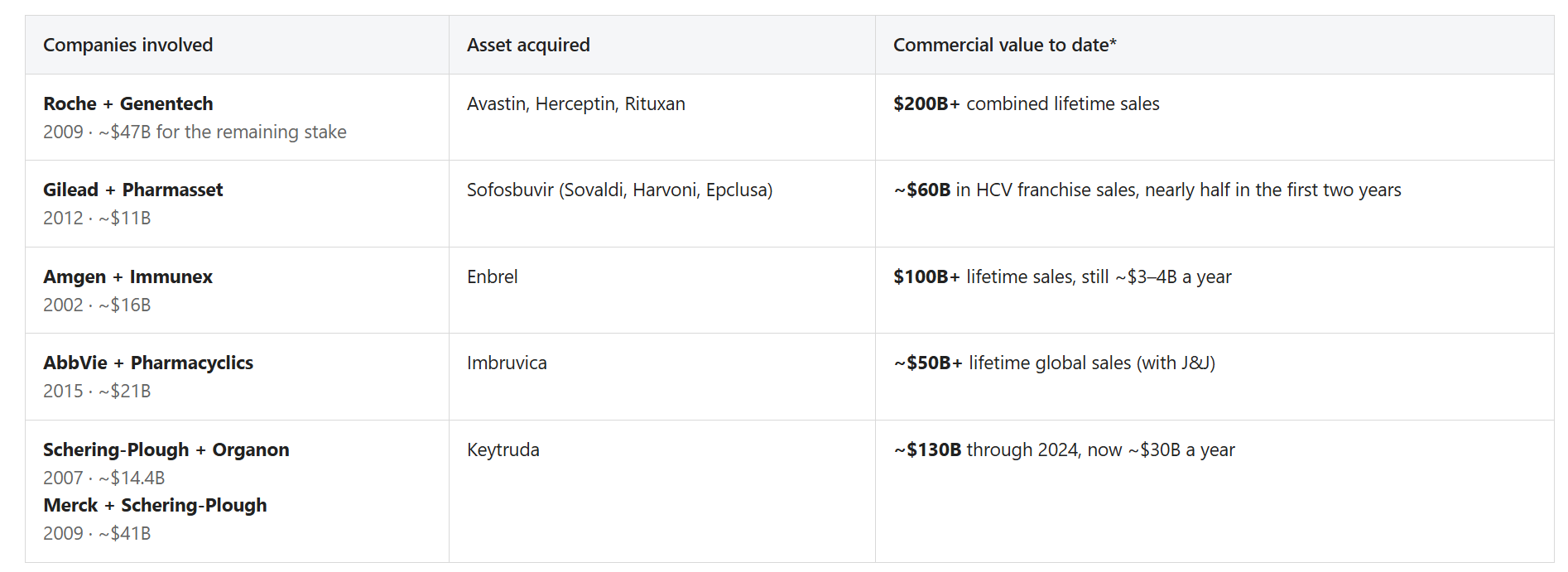
M&A has been a go-to for pharma to acquire high value assets and platforms and acquiring the right assets at the right time can be a game changer. It is also a risk as there is a lot of money involved and we are all aware of the success rates of bringing the final drug to the market.
This is a game of risk v/s returns for each pharma company, and 2026 has proven that big pharma is going all in to secure their future, especially in lieu of some of the key patent loss looming for major companies.
Some of the biggest M&A deals in past which have proven to be ultra-successful:
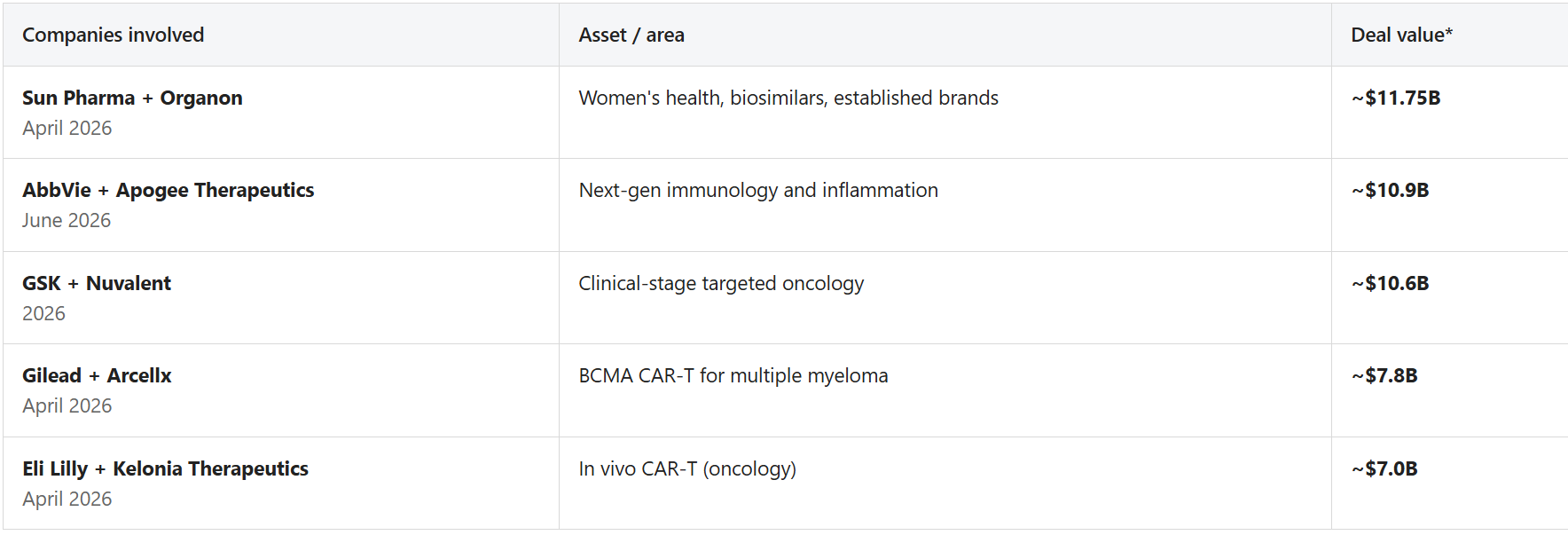
Top pharma M&A deals in 2026:
3. The next frontier: AI drug discovery
Below image states the time it takes, and the probability of success for each phase of bringing the drug to the market. Out of 100 assets entering phase 1 clinical trials, on average, only 8 assets make it to the market. By far, the most challenging problem for pharma is to research a molecule, execute all clinical trails successfully and finally bring it to the market, the average total cost of which is ~$2.6B per drug. This means that success is expensive, and failure is even more expensive than that.
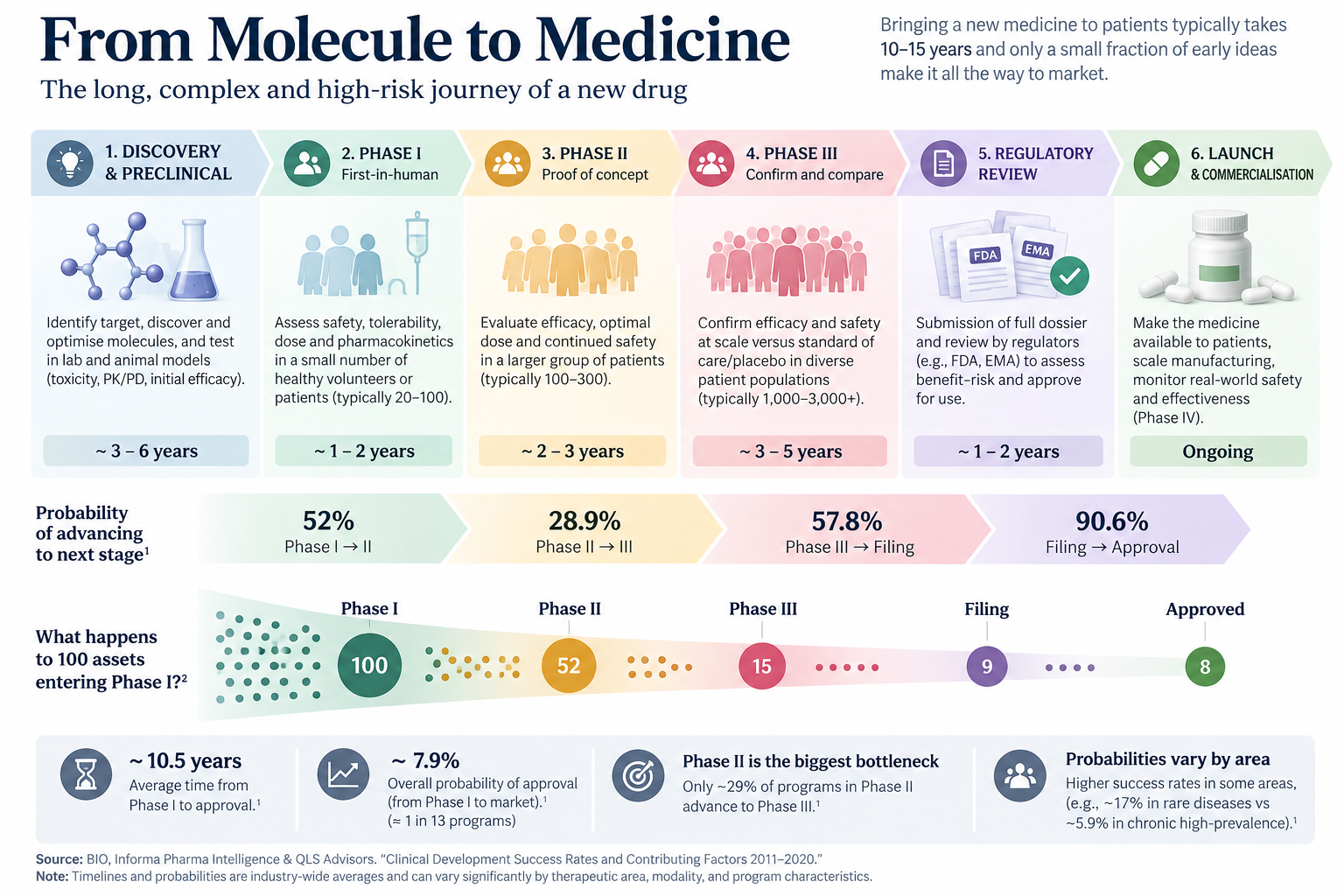
If you observe in above diagram, drug discovery/pre-clinical phase is the most tedious wherein it takes about 3-6 years to study the target molecule and this is where AI could make the highest impact.
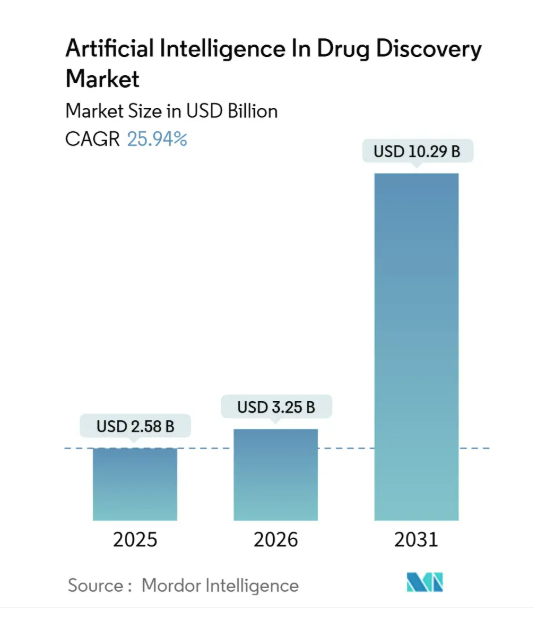
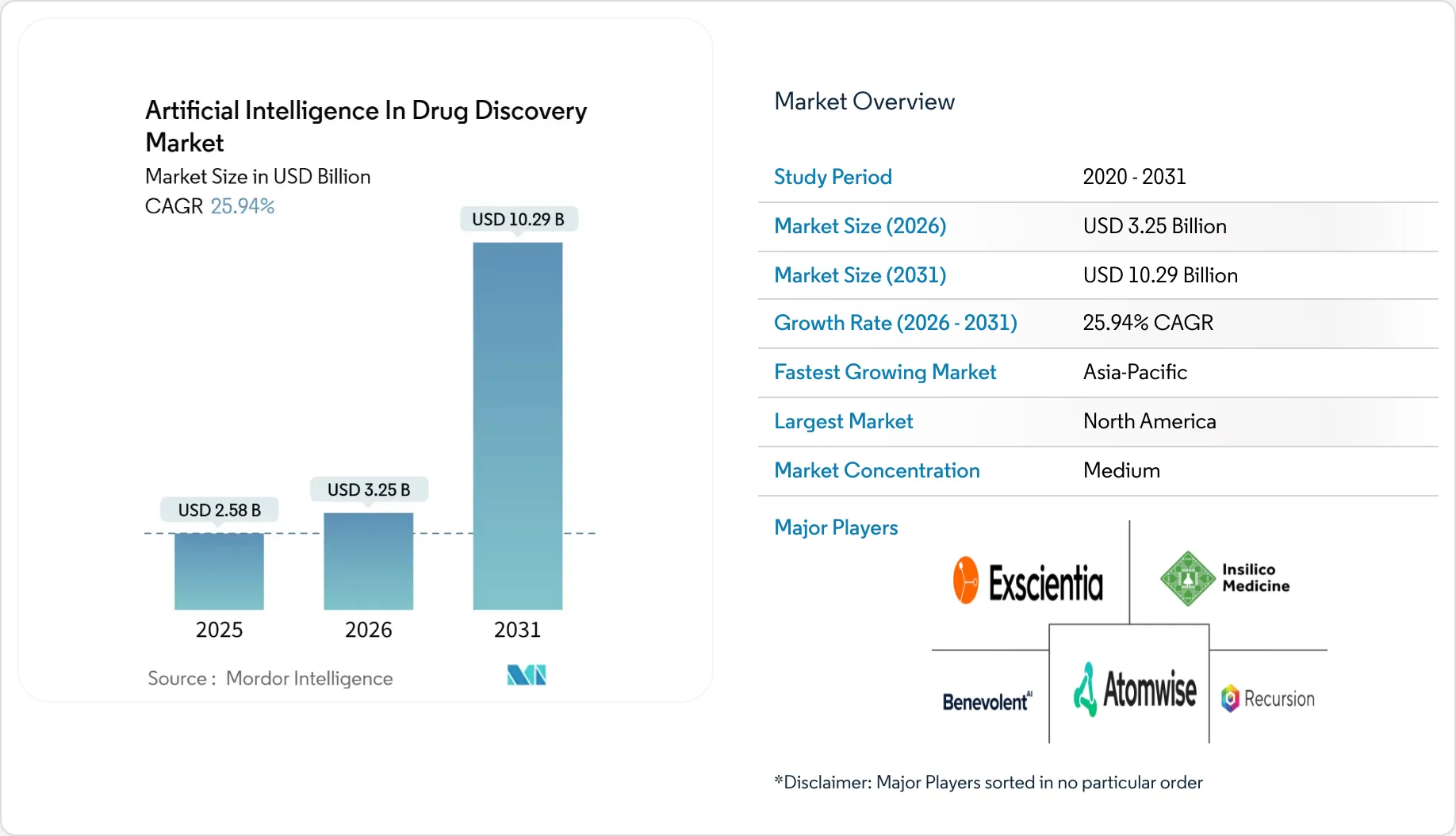
The biggest expectation from AI in pharma is not to redefine the ways of working or to ingest copilot and other apps into daily productivity. That is the bare minimum expectation. The biggest one is to reduce the time to find the target molecule through AI computations and drug discovery. Mordore Intelligence mentions that the drug discovery market is likely to reach $11B+ in 2031, from $3B in 2026 (CAGR - 26%).
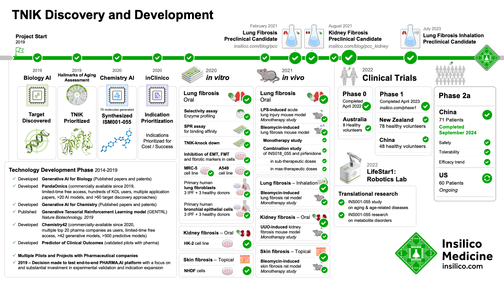
The biggest such AI win in 2026 w0rth mentioning in this blog is Insilico Medicine's Rentosertib, which is the first AI discovered medicine entering Phase 3 clinical trials for the treatment of Idiopathic Pulmonary Fibrosis (IPF).

AI is no longer just predicting molecules. It is beginning to produce clinical-stage medicines.
There have been other successes using AI too, but there isnt an AI discovered drug yet that has been commercialized. But I know for sure that there will be many in future, and since there are many companies that have dedicated themselves to this research, there will be plenty hopefully in the next decade.
The biggest change AI could bring to pharma isn't making scientists faster. It is changing which scientific problems are economically and biologically possible to solve. 2026 may not be the year AI discovered the first blockbuster drug. But it may be the year we started seeing convincing evidence that AI-designed medicines can survive the journey from computation to patients.
Other wins in 2026
If you want to read more about other very interesting clinical trails to watch out for in 2026, this is a great article: https://www.nature.com/articles/s41591-025-04083-x. Testing long-acting antibodies against HIV seems most interesting to me as I have been particularly involved in this space for a long time.
References

 Contributors to Wikimedia projects

https://pmc.ncbi.nlm.nih.gov/articles/PMC12898445/
 Mike May